SaXcell Secures Funding for New Recycling Factory
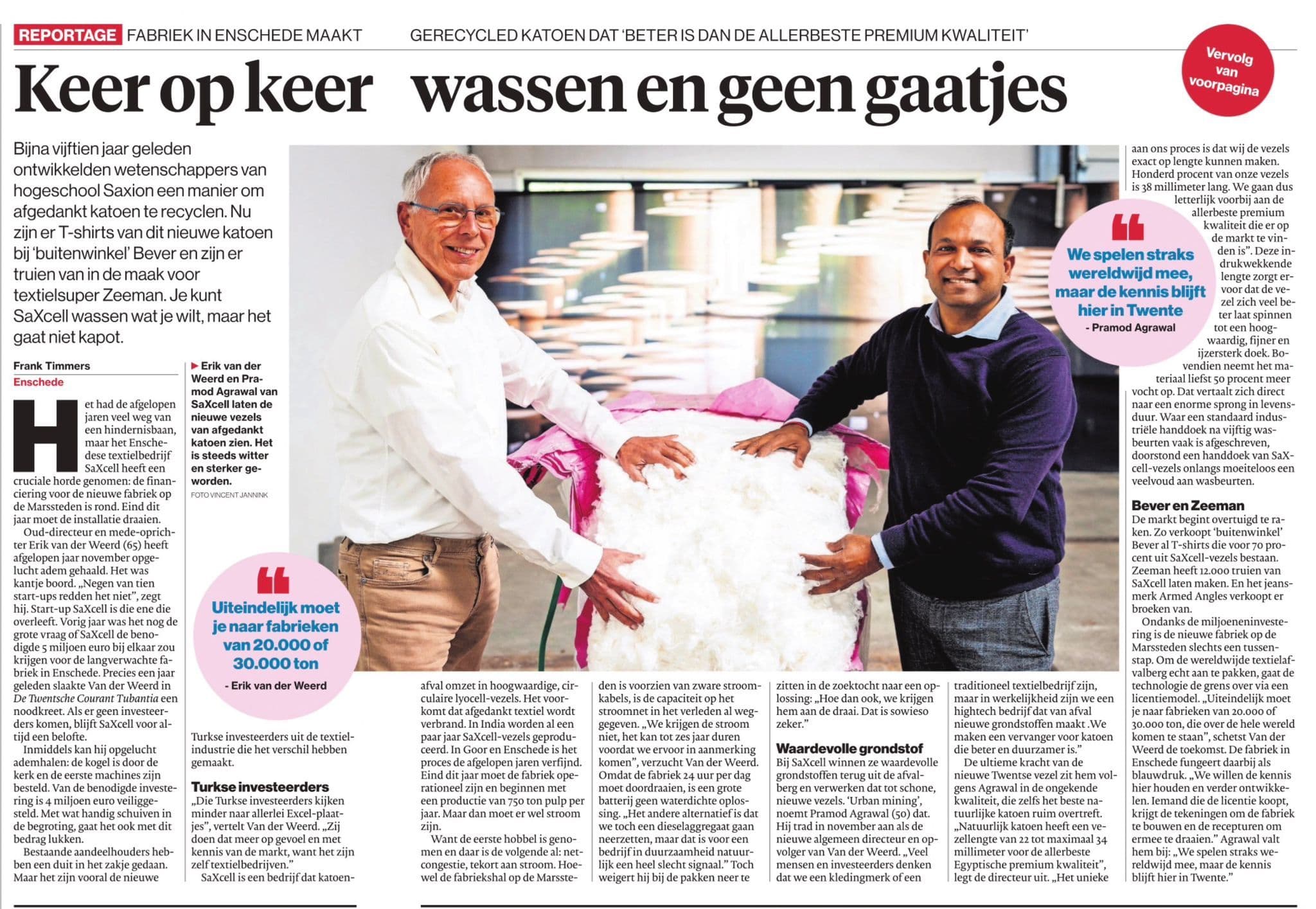
SaXcell has secured the financing needed to build its new recycling factory on the Marssteden industrial estate in Enschede. The breakthrough was reported by De Twentsche Courant Tubantia, marking a significant milestone for the Twente-based textile scale-up and the broader circular textile industry.
Financing Round Completed With Turkish Textile Investors
After a period of uncertainty, 4 of the 5 million euros required for the new factory has been secured. The decisive factor was the entry of new Turkish investors from the textile industry: companies with deep sector knowledge and a hands-on approach to investment.
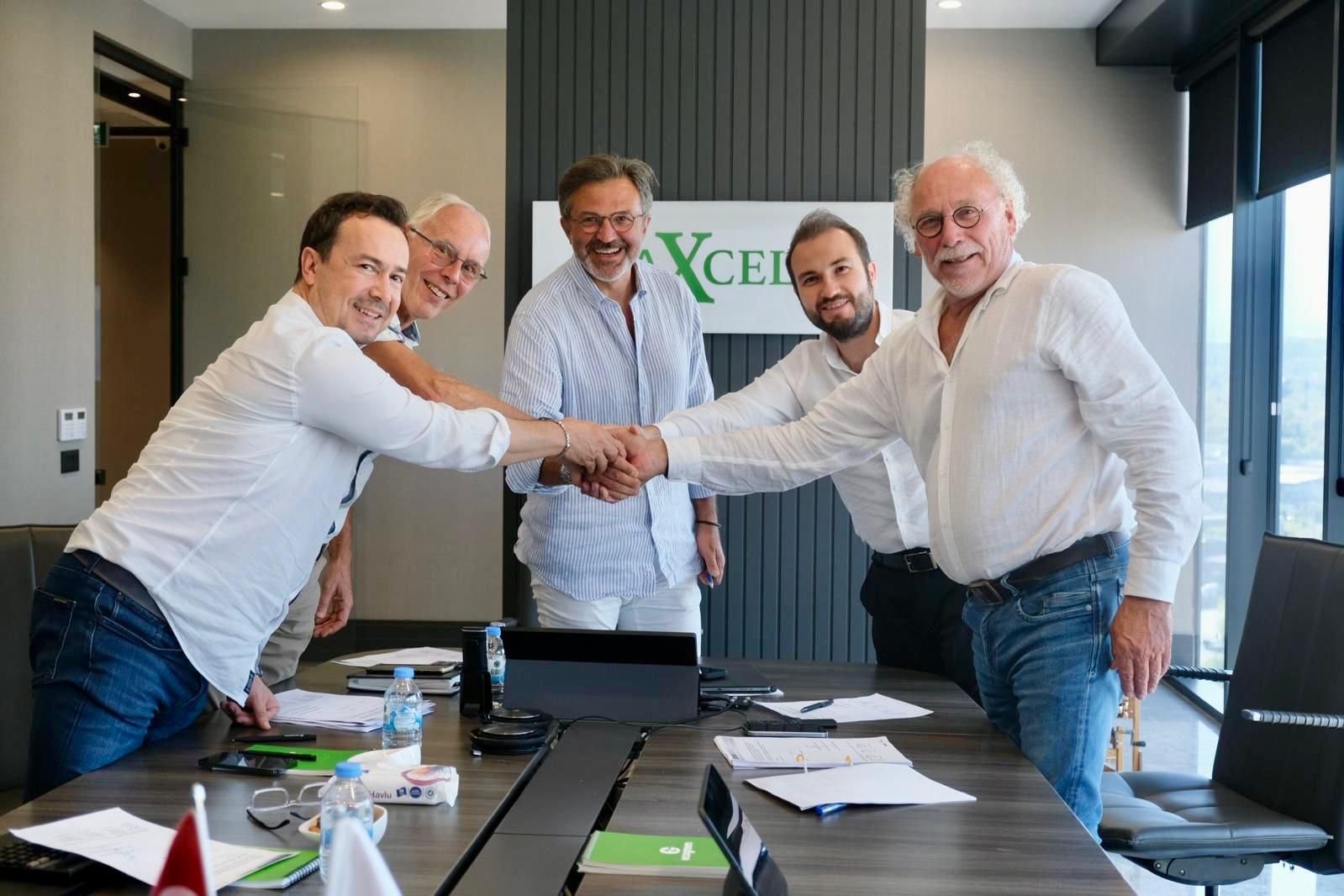
Co-founder Erik van der Weerd noted that the Turkish investors operate differently from traditional financial backers. They bring market knowledge and industry intuition, because they are textile companies themselves. This strategic alignment reinforces SaXcell's existing ties to Turkey, where shareholders Modeco, Uğurlular and Selin Tekstil are already on board. The factory is expected to be operational by the end of this year, with an initial production capacity of 750 tons of textile pulp per year.
A Fiber That Gets Stronger With Every Wash
What makes SaXcell's technology compelling is not just what it recycles, but what it produces. The new lyocell fiber is 38 millimeters long, absorbs 50% more moisture than standard cotton and lasts significantly longer through repeated washing. As CEO Pramod Agrawal put it in De Twentsche Courant Tubantia: the fiber can be washed as many times as you like and it does not wear out. A standard industrial towel is written off after 50 washes. A towel made from SaXcell fibers goes through a multiple of that without degradation.
This performance profile positions SaXcell not as an inferior recycled alternative but as a genuine upgrade on conventional cotton, in durability, moisture absorption and circular potential.
From Pilot to Market: Bever, Zeeman and Armedangels
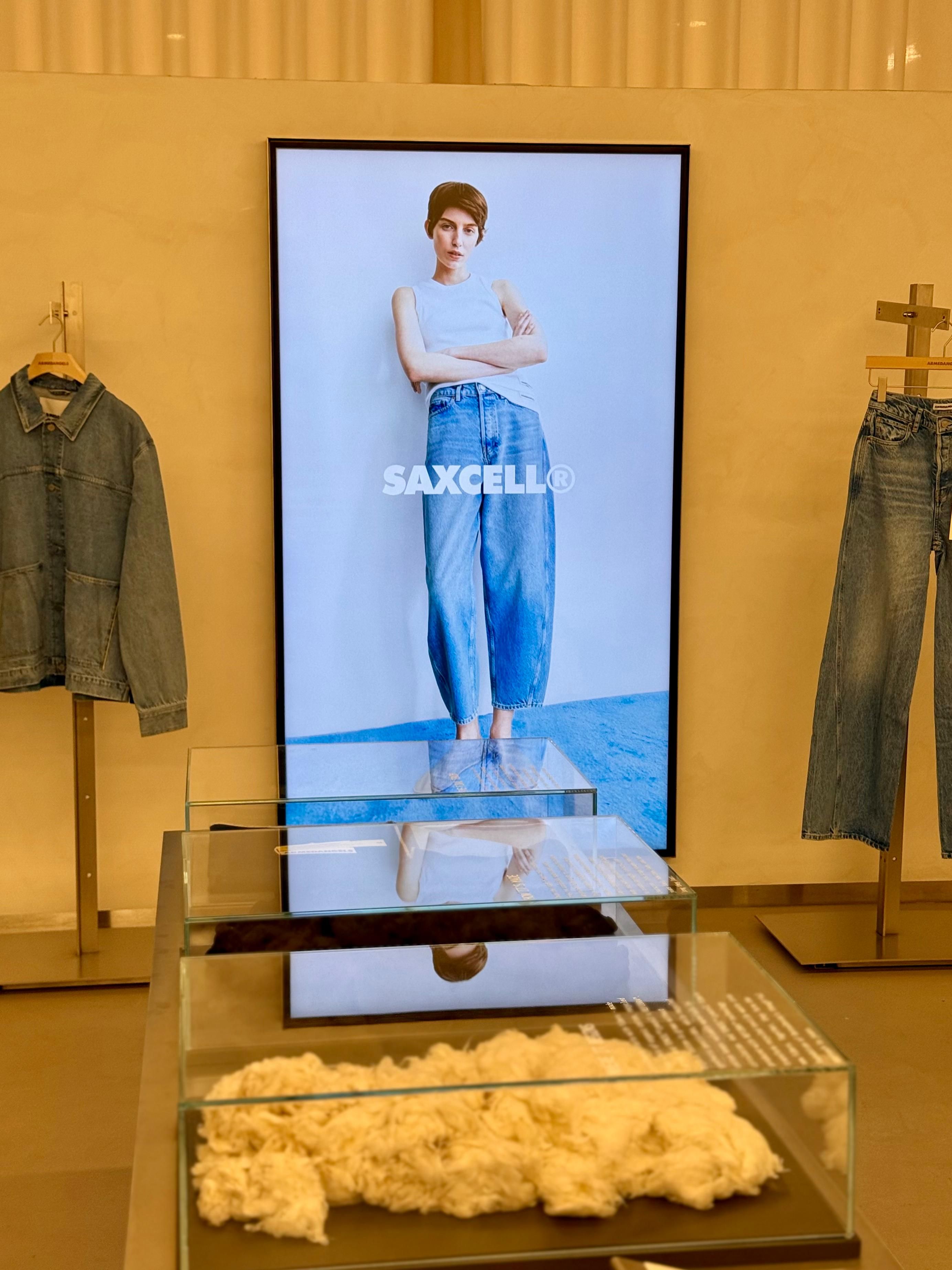
The commercial momentum is building. Buitenwinkel Bever is already selling garments made from 70% SaXcell material. Zeeman has ordered 12,000 sweaters. Jeans brand Armed Angels is selling trousers made from SaXcell fibers. These partnerships demonstrate that the "recycled doesn't mean downgraded" positioning is resonating with both sustainability-focused and mainstream retail brands.
New CEO Bridges Twente and the Global Market
Pramod Agrawal (50) has been appointed as SaXcell's new CEO. With an Indo-Dutch background, he brings a direct strategic connection to Birla Cellulose in India, where SaXcell's Twente-produced pulp is currently spun into fibers, as well as a bridge to the wider Asian textile market.
His vision for the company is clear: the Enschede factory is not the end goal. It is the blueprint. The ambition is to license the technology globally, supplying factories of 20,000 to 30,000 tons worldwide. As Agrawal stated in the article: "We will soon be playing globally, but the knowledge stays here in Twente."
One Remaining Challenge: The Power Grid
Despite the financing milestone, one significant operational challenge remains. The factory's required electricity connection has been allocated to other businesses on the grid, and it could take six to seven years before SaXcell receives its power supply. Because the chemical recycling process must run 24 hours a day, a large industrial battery is insufficient as a solution. The company is currently considering temporary diesel generators, an uncomfortable necessity for a business built on sustainability principles, and one that underlines the broader infrastructure challenges facing green industrial scale-ups in the Netherlands.
What This Means for Circular Textiles
SaXcell's progress is a concrete proof point for closed-loop textile recycling at industrial scale. With financing secured, commercial partners confirmed, a new CEO in place and global licensing on the horizon, the Enschede factory moves from promise to production.