What the EU Digital Product Passport Means for Textile Sourcing

Less than 1% of textiles worldwide are currently recycled into new fibers. The EU has decided that is no longer acceptable and the Digital Product Passport is one of the main instruments it is using to change that.
From 2027 onward, every garment sold on the EU market will need to carry a verified, product-level digital record covering fiber composition, recycled content, environmental impact and end-of-life guidance. For brands, this is a compliance deadline. For the supply chain, it is a structural shift in how sustainable claims are made and proven.
This article breaks down what the EU Digital Product Passport textile regulation requires, when it applies, what data it will demand and why the brands and fiber suppliers who prepare now will have a measurable commercial advantage by 2028.

What Is the EU Digital Product Passport?
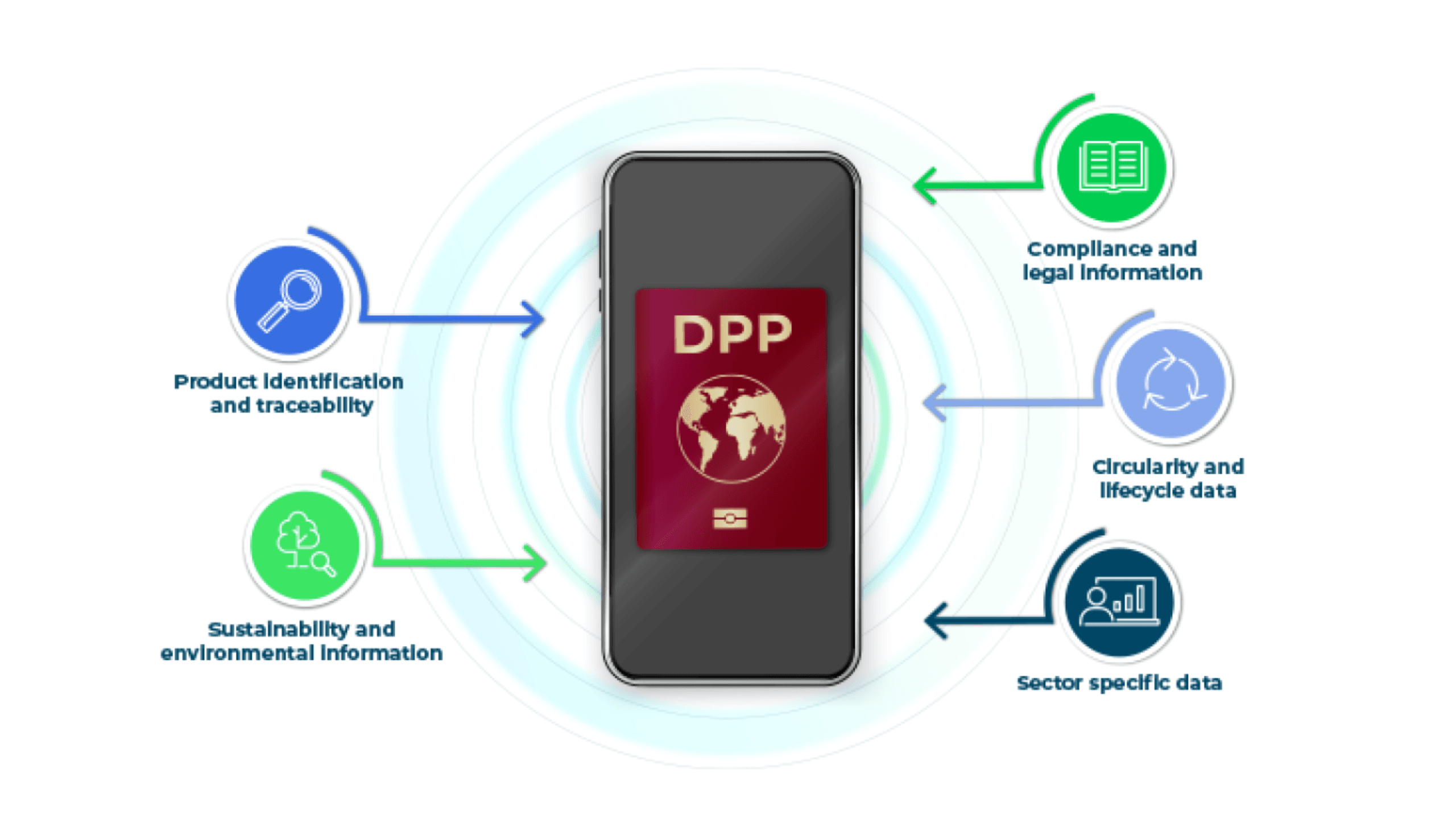
The Digital Product Passport (DPP) is a core element of the EU Ecodesign for Sustainable Products Regulation (ESPR), which entered into force on 18 July 2024. It is a product-level digital record, accessible via a QR code or NFC tag, that stores standardized sustainability and traceability data for a specific product throughout its lifecycle.
The DPP is not a new sustainability label. It is an enforceable data infrastructure requirement. Where traditional eco-certifications are voluntary and brand-managed, the DPP will be mandatory, third-party verifiable and accessible by regulators, recyclers and consumers alike.
Textiles and apparel are among the first product groups in the ESPR's 2025-2030 Working Plan. The delegated act setting the specific data requirements for garments is expected in 2027, with compliance deadlines approximately 18 months later, putting the effective enforcement date around mid-2028.
The DPP Timeline for Textiles: Key Dates
Brands and their supply chain partners need to understand the phased implementation clearly. Not all deadlines are equal.
Already in force:
- January 2025: EU Member States required to separately collect textiles for reuse and recycling
- July 2024: ESPR entered into force; unsold goods destruction ban framework established
Imminent:
- July 2026: Ban on destruction of unsold clothes and footwear applies to large enterprises; brands must begin disclosing the number and weight of unsold goods discarded per year
- July 2026: EU DPP registry goes live (initially storing unique product identifiers only)
Coming:
- 2027: Textiles delegated act adopted: specific DPP data fields and eco-design performance requirements confirmed
- Mid-2028: Compliance deadline for brands (~18 months after the delegated act)
- 2030: Destruction ban extended to medium-sized enterprises
Brands with complex global supply chains should plan for 18 to 36 months of implementation work. That means the preparation window is now, not in 2026.
What Data Will the DPP Require for Textiles?
The EU Commission published a Textile Preparatory Study in 2025 to assess which data points are technically feasible to collect at product level. While the full delegated act has not yet been adopted, the study identifies the most likely early requirements:
- Material composition and weights: exact fiber breakdown by percentage
- Key manufacturing processes: production stages and facility locations
- Core environmental indicators: notably climate impact, energy use and water consumption
- Chemical compliance references: substances of concern under REACH and related regulations
- Basic traceability information: production stages, country of origin, processing locations
- Durability, repairability and recyclability attributes: including end-of-life guidance for recyclers
The DPP also uses granular access rights. Consumers see sustainability scores and repair guidance. Recyclers access chemical content and disassembly instructions. Market surveillance authorities access full compliance documentation. This layered model means the DPP serves multiple stakeholders simultaneously, not just the end consumer.
Why Traceability Starts at the Fiber Level
This is the detail most brands are underestimating. The DPP does not stop at Tier 1 suppliers. Unlike traditional supplier audits, it demands verified data from the raw material level upward: yarn spinners, fabric mills, dye houses and fiber producers all need to supply structured, machine-readable information.
Many brands currently have visibility into their direct manufacturers but lack data on who spun the yarn or where the fiber was produced. Without that upstream transparency, a DPP cannot contain verified lifecycle data.
This is why the DPP transforms fiber selection from a sustainability preference into a compliance requirement. A fiber with documented, traceable upstream data is not just preferable. It is necessary.

The Critical Rule on Recycled Content
One anticipated detail in the ESPR's approach to recycled content targets has significant implications for the textile industry. Policy experts and industry analysts anticipate the European Commission will recognize only textile-to-textile recycled feedstocks as eligible for recycled content targets excluding recycled PET bottles.
This matters because a significant portion of the industry currently counts rPET (recycled polyester from plastic bottles) as its primary sustainability credential. If the Commission confirms that only fiber-to-fiber recycled inputs count toward DPP recycled content requirements, brands relying exclusively on rPET will need to reconsider their sourcing strategies.
The direction is consistent with the broader EU textile strategy. The 2030 target is for textiles to be "largely made from recycled fibers", not recycled plastic. The infrastructure the EU is building, from mandatory EPR schemes to fiber-to-fiber recycling investment programs, is designed around closing the textile loop specifically.
What This Means for Sourcing Decisions Today
The DPP fundamentally changes the commercial value of supply chain transparency. Brands that begin mapping their fiber supply chains now, going beyond Tier 1 to document fiber origin; production chemistry and environmental impact data will be able to populate a compliant DPP with verified information when the delegated act is adopted.
Those that wait will face two problems at once: a tight compliance window and a supplier base that has not yet structured its data. Implementation timelines of 18 to 36 months are realistic for complex supply chains. Starting in 2026, when the delegated act details are confirmed, leaves very little margin.
The broader commercial opportunity is also significant. Full DPP adoption across the EU is projected to unlock $700 billion in circular economy revenue. Brands that treat the DPP as strategic infrastructure using verified product data to strengthen customer relationships, reduce counterfeit risk and support resale and repair services will extract more value from it than those treating it as a compliance cost.

How SaXcell's Fiber Is Built for DPP Compliance
SaXcell produces lyocell fiber from cotton-rich textile waste using a closed-loop process. The data the DPP will require is data we have already structured and verified as part of our standard production process.
This is not a DPP-readiness project for us. It is a description of how we already operate. For brands building their DPP data architecture now, partnering with fiber suppliers who already have this documentation structured is the most direct path to compliance.
The Regulatory Context: DPP Is One Part of a Larger Framework
The DPP does not operate in isolation. It sits within a broader regulatory stack that is reshaping the EU textile market simultaneously:
- Mandatory textile EPR schemes entered into force October 2025: all Member States must establish producer responsibility schemes by April 2028
- Ban on unsold goods destruction: applies to large enterprises from July 2026
- Revised Textile Labeling Regulation: under review, with a Commission proposal expected Q2 2026
- Green claims regulation: the EU's Empowering Consumers Directive is already setting binding rules on unsubstantiated environmental marketing claims
Together, these regulations are closing the space for vague sustainability claims and opening a significant advantage for brands and suppliers who can provide verified, product-level environmental data. The DPP is the data layer that makes the entire system enforceable.
Prepare Now, Not in 2027
The compliance deadline for the EU Digital Product Passport in textiles is mid-2028. That sounds distant. It is not. For brands with global supply chains spanning multiple tiers, 18 to 36 months of preparation work is realistic. For brands that have not yet mapped beyond Tier 1, the data collection process alone can take over a year.
The brands and fiber suppliers that start now, structuring traceability data, auditing material blends for recyclability, and identifying supply chain partners with documented environmental metrics, will be ready. The regulation will not wait for the industry to catch up.
If you are evaluating sustainable fiber options for your next collection and want to understand how SaXcell's production process maps to DPP requirements, we are happy to share our technical data.
Sources:
EU ESPR Working Plan 2025-2030 - Intertek EU Digital Product Passport for Fashion - Carbonfact ESPR Textile Crash Course - Carbonfact DPP Revolution: US Brands and EU Traceability - Intertek EU Textile Strategy and Regulations Overview - Carbonfact Digital Product Passport as Competitive Advantage - Renoon DPP Takes the Runway - NRF EU Textile Strategy DPP Guide - TraceX